

How to teach hurdle techniques is a topic that excites many coaches, parents, and young athletes. Hurdling is a fun and challenging track and field event that combines speed, agility, and coordination. However, teaching it can seem tricky at first. Don’t worry! This guide will break down everything you need to know in a way that’s easy to understand, even for an eleven-year-old. Whether you’re a coach helping a team or a beginner learning to hurdle, you’ll find clear steps, tips, and tricks here. Let’s dive in!
What Are Hurdle Techniques?
Hurdling is a race where athletes jump over obstacles, called hurdles, while running. The goal is to clear each hurdle smoothly without slowing down or knocking it over. Therefore, teaching hurdle techniques means helping athletes learn how to jump, land, and keep running with speed and control. For example, a good hurdler moves like a dancer, flowing over hurdles with grace and power.
To teach hurdle techniques effectively, you need to focus on three main things:
- Proper body position – How the athlete stands, leans, and jumps.
- Timing and rhythm – Moving at the right speed to clear hurdles.
- Safety – Avoiding falls or injuries while hurdling.
Now, let’s explore how to teach these skills step by step.
Why Teaching Hurdle Techniques Matters
Hurdling isn’t just about jumping over obstacles. In fact, it builds confidence, strength, and focus. For young athletes, learning hurdle techniques can also teach them how to face challenges and stay calm under pressure. Additionally, coaches who teach hurdling well can help kids avoid injuries and feel excited about track and field.
For instance, when kids learn to hurdle correctly, they’re less likely to trip or fall. As a result, they gain confidence and enjoy the sport more. So, teaching hurdle techniques the right way sets athletes up for success.
Step-by-Step Guide to Teach Hurdle Techniques
Here’s a simple guide to teaching hurdle techniques. Each step is easy to follow, and you can use it with beginners or young athletes.
Step 1: Start with the Basics of Hurdle Techniques
Before anyone jumps over a hurdle, they need to understand the basics. First, explain what a hurdle is. It’s a light, upright frame that athletes must jump over without knocking it down. Then, show them a hurdle in person or use a picture. For example, you can say, “A hurdle is like a small fence you leap over while running.”
Next, teach the correct body position. Athletes should:
- Keep their knees slightly bent.
- Lean forward a little, like they’re about to sprint.
- Hold their arms close to their sides, ready to swing.
To make this fun, have kids practice standing in this position. For instance, you can say, “Pretend you’re a superhero about to take off!” This helps them feel excited and makes the posture easy to remember.
Step 2: Teach the Lead Leg and Trail Leg
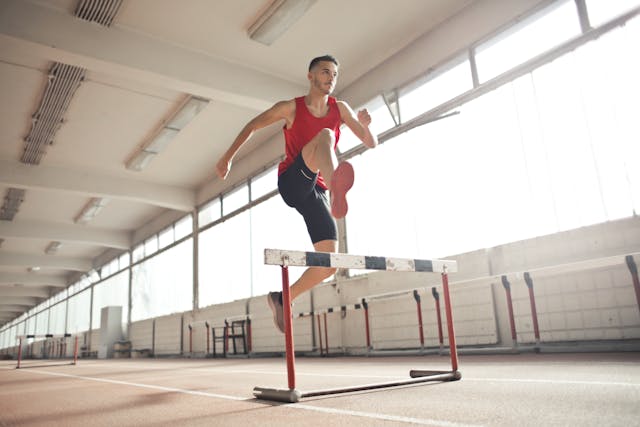
Hurdling involves two key leg movements: the lead leg and the trail leg. The lead leg is the one that goes over the hurdle first. The trail leg follows behind, tucking in to avoid hitting the hurdle. Here’s how to teach these hurdle techniques:
- Lead Leg: Tell athletes to lift their knee high, like they’re stepping over a big puddle. Their foot should point forward, not sideways. For example, you can say, “Imagine stepping over a sleeping dog without waking it up!”
- Trail Leg: The trail leg should bend at the knee and swing around the side of the hurdle. Show them how to tuck their foot close to their body. A fun way to practice is to have them step over a low object, like a book, while keeping their trail leg tucked.
To practice, set up a low hurdle or even a line on the ground. Have athletes walk over it slowly, focusing on their lead and trail legs. As a result, they’ll get comfortable with the motion before adding speed.
Step 3: Practice the Approach to the Hurdle
The approach is how athletes run toward the hurdle. To teach this part of hurdle techniques, focus on rhythm and steps. Most beginners take about 8 steps to reach the first hurdle in a race. Here’s how to teach it:
- Mark a starting line and place a hurdle about 10 meters away.
- Ask athletes to jog toward the hurdle, counting their steps.
- Encourage them to take off about 2 meters before the hurdle. This gives them enough space to jump.
For example, you can say, “Run like you’re chasing a butterfly, then leap over the hurdle when you’re close!” Additionally, remind them to stay relaxed and not rush. If they rush, they might trip. Therefore, practicing a steady rhythm is key.
Step 4: Teach the Jump and Landing
Jumping over the hurdle is the most exciting part! However, it’s also where many beginners get nervous. To teach this hurdle technique, break it down into simple steps:
- Jump: As the athlete approaches the hurdle, they should push off with their back foot (the one not leading). Their lead leg should go up and over the hurdle, while their body leans forward slightly.
- Landing: After clearing the hurdle, the athlete should land on their lead leg and keep running. Their trail leg should swing forward quickly to prepare for the next step.
To make this easier, use low hurdles or even cones at first. For instance, say, “Pretend you’re hopping over a small stream and landing softly on the other side.” Consequently, this helps kids feel confident and safe.
Step 5: Build Speed and Confidence
Once athletes can walk over hurdles, it’s time to add speed. However, don’t rush this step. Instead, gradually increase the pace. For example, have them jog over one hurdle, then two, then three. As they get better, they’ll naturally speed up.
To build confidence, cheer them on! Say things like, “You’re flying over those hurdles like a champion!” Positive words make a big difference. Also, remind them to stay relaxed. If they tense up, they might knock over the hurdle.
Step 6: Teach Safety in Hurdle Techniques
Safety is super important when teaching hurdle techniques. Hurdles are designed to fall easily if hit, but athletes still need to be careful. Here are some safety tips:
- Always use hurdles that are the right height for beginners (usually 30 inches or lower).
- Teach athletes to land softly to avoid hurting their knees or ankles.
- Make sure the track is clear of obstacles before practice.
- Encourage them to stop if they feel tired or scared.
For example, you can say, “If you feel wobbly, take a break. It’s okay to go slow at first!” As a result, athletes will feel safe and supported.
Drills to Improve Hurdle Techniques
Drills are a great way to practice hurdle techniques. They help athletes get better without feeling overwhelmed. Here are some fun and easy drills:
Drill 1: Hurdle Walkovers
Set up 3–5 low hurdles in a row, about 2 meters apart. Have athletes walk over each hurdle, focusing on their lead and trail legs. For instance, you can say, “Step over each hurdle like you’re climbing over a low wall.” This drill builds muscle memory.
Drill 2: One-Step Hurdles
Place hurdles closer together (about 1 meter apart). Ask athletes to take one step between each hurdle and jump. This teaches them to stay quick and light on their feet. For example, say, “Hop, hop, hop, like a bunny over the hurdles!”
Drill 3: Rhythm Run
Set up hurdles at normal race spacing (about 8–9 meters apart). Have athletes jog toward the first hurdle, jump over it, and keep running to the next one. This helps them practice timing and rhythm. You can say, “Find your groove, like dancing to your favorite song!”
Drill 4: Trail Leg Practice
Have athletes stand next to a hurdle and practice swinging their trail leg over it while keeping their body steady. This isolates the trail leg movement. For example, say, “Swing your leg like you’re kicking a soccer ball gently over the hurdle.”
For more drill ideas, check out this USA Track & Field coaching guide for beginner-friendly tips.
Common Mistakes in Hurdle Techniques and How to Fix Them
Even with great teaching, beginners make mistakes. Here are some common errors and how to fix them:
- Jumping Too High: Some athletes jump way higher than needed, which slows them down. To fix this, remind them to skim the hurdle, not soar over it. Say, “Pretend you’re just brushing the top of the hurdle with your foot.”
- Knocking Over Hurdles: This happens when the trail leg isn’t tucked properly. Practice the trail leg drill to help them get it right.
- Slowing Down Before the Hurdle: Beginners often hesitate before jumping. Encourage them to keep their speed steady. For example, say, “Run through the hurdle like it’s not even there!”
- Poor Arm Movement: Arms should swing naturally to help with balance. If they’re flailing, have athletes practice running with their arms moving like a pendulum.
By addressing these mistakes early, you’ll help athletes improve faster.
Tips for Coaches Teaching Hurdle Techniques
If you’re a coach, here are some extra tips to make teaching hurdle techniques easier:
- Be Patient: Every athlete learns at their own pace. Therefore, give them time to get comfortable.
- Use Fun Analogies: Kids love comparisons like “jump like a kangaroo” or “run like you’re chasing a puppy.” This makes learning fun.
- Mix It Up: Combine drills with games to keep practice exciting. For instance, time how fast they can clear three hurdles and cheer their progress.
- Watch and Correct: Pay attention to each athlete’s form and give specific feedback. For example, say, “Great job, but try lifting your knee a bit higher next time.”
- Encourage Teamwork: Let athletes cheer for each other. As a result, they’ll feel motivated and supported.
For more coaching tips, visit TrackNation for advice from experienced track coaches.
How to Teach Hurdle Techniques to Different Age Groups
Hurdle techniques can be taught to kids, teens, or even adults. However, you’ll need to adjust your approach based on their age.
Teaching Kids (Ages 8–12)
Young kids need simple instructions and lots of encouragement. Use low hurdles (about 24 inches) and focus on fun. For example, turn practice into a game by saying, “Let’s see who can hop over the hurdles like a frog!” Also, keep sessions short (20–30 minutes) to match their attention spans.
Teaching Teens (Ages 13–18)
Teens can handle more technical details, like step counting and rhythm. Use standard hurdles (30–33 inches) and explain how hurdling helps in other sports, like soccer or basketball. For instance, say, “Hurdling makes you faster and stronger for all your games!”
Teaching Adults
Adults may be learning hurdling for fitness or competition. Focus on safety and proper form to avoid injuries. For example, remind them to warm up well and stretch before practice. You can say, “Let’s take it slow to keep your muscles happy!”
FAQs About How to Teach Hurdle Techniques
Here are some common questions about teaching hurdle techniques, with simple answers:
Q: How tall should hurdles be for beginners?
A: For kids and beginners, use hurdles that are 24–30 inches tall. They’re easier to clear and safer.
Q: How many steps should athletes take between hurdles?
A: Beginners usually take 3 steps between hurdles. As they get faster, they’ll naturally adjust.
Q: Can anyone learn to hurdle?
A: Yes! With practice and good coaching, anyone can learn hurdle techniques, no matter their age or skill level.
Q: How do I make hurdling fun for kids?
A: Use games, fun analogies (like “jump like a superhero”), and lots of cheering to keep kids excited.
Q: What’s the most important thing to teach first?
A: Start with body position and the lead/trail leg movements. These build a strong foundation for hurdling.
For more FAQs, check out this Beginner’s Guide to Hurdling from Athletics Weekly.
Conclusion
Teaching hurdle techniques is all about making it fun, safe, and simple. By starting with the basics, like body position and leg movements, you can help athletes build confidence. Then, use drills, games, and encouragement to keep them excited. As a result, they’ll learn to hurdle smoothly and love the sport. Whether you’re coaching kids, teens, or adults, these steps will guide you to success. So, grab some hurdles, head to the track, and start teaching hurdle techniques today!