
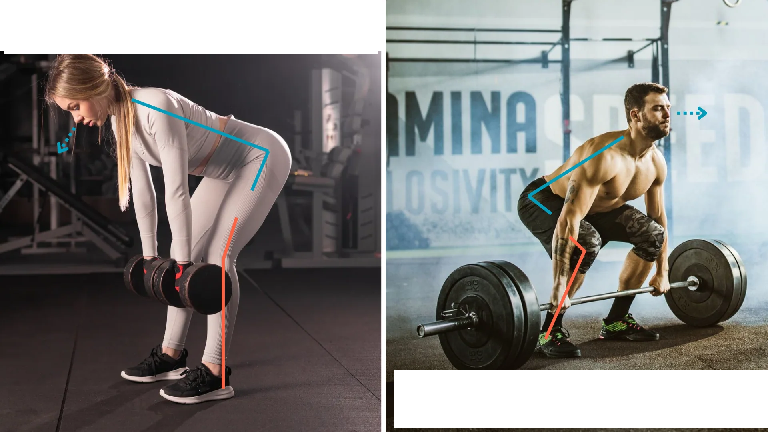
Romanian deadlifts are one of the most effective exercises for building stronger hamstrings, developing powerful glutes, and improving overall athletic performance. Whether your goal is muscle growth, better sports performance, injury prevention, or increased strength, Romanian deadlifts deserve a place in your workout routine.
Many people focus heavily on exercises like squats, leg presses, and lunges. While those movements are excellent, they often leave part of the lower body undertrained. Specifically, the muscles on the back side of the body—known as the posterior chain—do not always receive enough attention.
This is where Romanian deadlifts shine.
Unlike many lower-body exercises, Romanian deadlifts train the hamstrings, glutes, lower back, and core through a powerful hip-hinge movement. As a result, they help create balanced strength, improve posture, and enhance overall movement quality.
In this complete guide, you’ll learn:
- What Romanian deadlifts are
- Muscles worked
- Benefits for men and women
- Proper Romanian deadlift form
- Common mistakes
- Best variations
- Romanian deadlifts vs other exercises
- Workout plans
- Progression strategies
- Expert tips
- Frequently asked questions
Let’s begin.
What Are Romanian Deadlifts?
Romanian deadlifts, often called RDLs, are a lower-body compound exercise that focuses on the posterior chain.
Unlike conventional deadlifts, Romanian deadlift start from a standing position rather than from the floor. During the movement, you push your hips backward while lowering the weight down your legs. Then you return to a standing position by driving your hips forward.
The exercise emphasizes:
- Hamstrings
- Glutes
- Lower back
- Core muscles
Because the hamstrings remain under tension throughout much of the movement, Romanian deadlifts are considered one of the best exercises for hamstring development.
Romanian Deadlifts at a Glance
| Feature | Details |
| Exercise Type | Compound |
| Movement Pattern | Hip Hinge |
| Primary Muscles | Hamstrings, Glutes |
| Secondary Muscles | Lower Back, Core, Lats |
| Equipment | Barbell, Dumbbells, Kettlebells |
| Difficulty | Beginner to Advanced |
| Main Goal | Strength and Muscle Growth |
| Best For | Posterior Chain Development |
Why Romanian Deadlifts Matter
Many people spend years training without developing a strong posterior chain.
This can lead to:
- Poor posture
- Weak hamstrings
- Lower back discomfort
- Reduced athletic performance
- Muscle imbalances
Romanian deadlifts address all these issues at once.
Furthermore, the exercise teaches proper hip mechanics. This movement pattern carries over to many daily activities, including lifting objects, running, jumping, and bending safely.
As a result, Romanian deadlifts are commonly used by:
- Athletes
- Bodybuilders
- Powerlifters
- Personal trainers
- Physical therapists
- General fitness enthusiasts
Romanian Deadlifts Muscles Worked
One reason Romanian deadlifts are so effective is the large number of muscles involved.
Primary Muscles Worked
Hamstrings
The hamstrings are the main muscles targeted during Romanian deadlifts.
They include:
- Biceps femoris
- Semitendinosus
- Semimembranosus
As you lower the weight, the hamstrings stretch under load. Then they contract to bring your body back upright.
This combination of stretching and contracting makes Romanian deadlifts exceptional for building stronger and larger hamstrings.
Gluteus Maximus
The glutes play a major role during hip extension.
As you drive your hips forward at the top of the movement, the glutes produce force and help complete the lift.
For this reason, Romanian deadlifts are often included in glute-focused training programs.
Secondary Muscles Worked
Erector Spinae
These muscles run along the spine and help maintain proper posture throughout the exercise.
Core Muscles
Your abs and deep core muscles stabilize your torso and help protect your spine.
Latissimus Dorsi
The lats keep the weight close to the body and improve lifting mechanics.
Trapezius
The traps assist with posture and shoulder stability.
Benefits of Romanian Deadlifts
Romanian deadlifts offer numerous benefits that extend beyond simply building muscle.
- Build Stronger Hamstrings
Few exercises challenge the hamstrings as effectively.
Stronger hamstrings can improve:
- Sprinting speed
- Jumping ability
- Athletic performance
- Knee stability
- Increase Glute Development
Many people perform Romanian deadlifts primarily for glute growth.
The movement places significant tension on the glute muscles, especially during the upward phase.
- Improve Athletic Performance
Athletic movements often rely on powerful hip extension.
Romanian deadlifts improve:
- Sprinting
- Jumping
- Acceleration
- Direction changes
This is why many sports teams include them in strength programs.
- Improve Posture
Long hours of sitting can weaken the posterior chain.
Romanian deadlifts strengthen the muscles responsible for keeping the body upright.
As a result, posture often improves over time.
- Reduce Injury Risk
Weak hamstrings are associated with many sports injuries.
Strengthening these muscles may help reduce injury risk and improve overall movement quality.
- Increase Total-Body Strength
Although Romanian deadlifts focus on the lower body, they also challenge:
- Grip strength
- Core stability
- Back strength
This creates a stronger and more resilient body.
Romanian Deadlifts Benefits for Men
Men often use Romanian deadlifts to increase strength and muscle mass.
Benefits include:
- Bigger hamstrings
- Larger glutes
- Improved deadlift performance
- Greater athletic power
- Enhanced lower-body strength
Additionally, Romanian deadlifts help create balanced leg development, which improves overall physique appearance.
Romanian Deadlifts Benefits for Women
Romanian deadlifts are equally beneficial for women.
Benefits include:
- Stronger glutes
- Better posture
- Improved hip strength
- Increased lower-body definition
- Enhanced daily movement
Many women find Romanian deadlifts particularly effective for developing glute shape while strengthening the entire lower body.
How to Do Romanian Deadlifts Properly
Proper technique is essential.
Follow these steps carefully.
Step 1: Stand Tall
Hold a barbell in front of your thighs.
Keep:
- Chest up
- Core tight
- Shoulders back
Step 2: Slightly Bend the Knees
Unlock the knees slightly.
Avoid turning the movement into a squat.
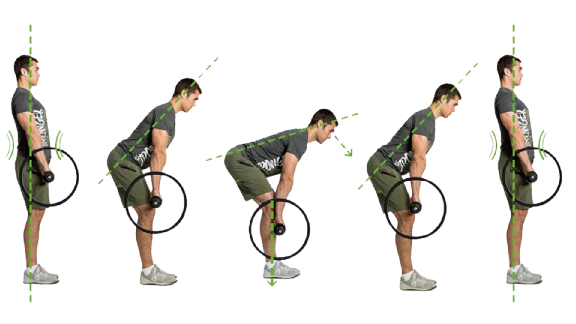
Step 3: Push the Hips Back
This is the most important step.
Imagine closing a car door with your hips.
Keep the weight close to your legs.
Step 4: Lower the Weight
Continue lowering until:
- You feel a hamstring stretch
- Your back remains straight
For most people, this occurs around mid-shin.
Step 5: Return to Standing
Drive your hips forward.
Squeeze your glutes at the top.
Repeat.
Romanian Deadlift Form Checklist
| Form Cue | Correct Action |
| Spine | Neutral |
| Head | Aligned with spine |
| Knees | Slight bend |
| Core | Braced |
| Hips | Move backward |
| Weight | Close to legs |
| Shoulders | Back and down |
| Finish | Glutes squeezed |
Trainer Tips for Better Romanian Deadlifts
Trainer Tip #1
Push your hips backward rather than thinking about lowering the bar.
This improves the hip hinge pattern.
Trainer Tip #2
Keep the weight close to your body throughout the movement.
Trainer Tip #3
If you feel discomfort in the lower back, reduce the weight and review your technique.
Trainer Tip #4
Slow down the lowering phase for greater muscle activation.
Material to perform the Romanian deadlift
Performing the Romanian deadlift does not always require specific machines, but certain instruments or equipment can be useful to improve the comfort and effectiveness of the exercise.
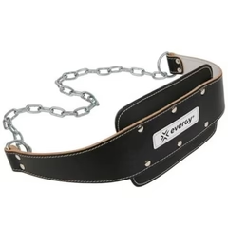
Weight lifting belt:
A lifting belt can provide additional support for the lower back during the Romanian deadlift.
The Romanian deadlift is a valuable tool in any training program. Whether with a barbell or dumbbells, its impact on strength and muscle development makes it an essential exercise.
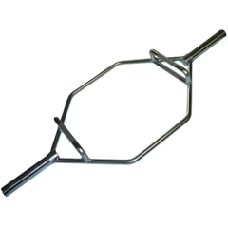
Hexagonal bars (hex bars):
These bars have a hexagonal shape and allow the user to stand in the center, making deadlifts easier and reducing the load on the lower back.
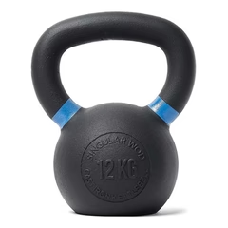
Kettlebells:
Kettlebells are also useful for performing variations of the Romanian deadlift. They can offer an extra challenge and work different muscles due to their unique design.
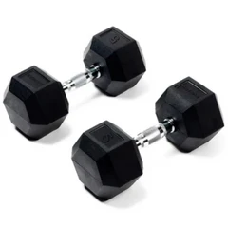
Dumbbells:
Dumbbells are a great alternative to the Romanian deadlift as they allow for a more natural range of motion and may be more comfortable for some users.
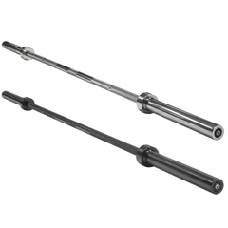
Olympic Bar:
Using an Olympic bar with added weight is common for the Romanian deadlift. Make sure you have the proper technique and flexibility to use a bar.
Common Romanian Deadlift Mistakes
Rounding the Back
This is the most common mistake.
Always maintain a neutral spine.
Squatting Instead of Hinging
Too much knee bend turns the exercise into a squat.
Focus on moving the hips backward.
Using Excessive Weight
Heavy weight often leads to poor form.
Master technique first.
Looking Up Too Much
Keep your neck neutral.
Avoid excessive head movement.
Lowering Too Far
Stop when flexibility ends.
Going lower can cause spinal rounding.
Romanian Deadlifts vs Conventional Deadlifts
| Feature | Romanian Deadlifts | Conventional Deadlifts |
| Start Position | Standing | Floor |
| Main Focus | Hamstrings and Glutes | Full Body |
| Knee Bend | Slight | Moderate |
| Weight Used | Moderate | Heavy |
| Range of Motion | Partial | Full |
| Muscle Emphasis | Posterior Chain | Entire Body |
Both exercises are valuable and complement each other well.
Romanian Deadlifts vs Stiff-Leg Deadlifts
Many people confuse these exercises.
| Feature | Romanian Deadlift | Stiff-Leg Deadlift |
| Knee Bend | Slight | Minimal |
| Hamstring Stretch | High | Very High |
| Lower Back Stress | Moderate | Higher |
| Beginner Friendly | Yes | Less |
| Control | Easier | More Demanding |
For most people, Romanian deadlifts are the safer and more practical option.
Romanian Deadlifts vs Hip Thrusts
| Feature | Romanian Deadlift | Hip Thrust |
| Main Focus | Hamstrings and Glutes | Glutes |
| Core Activation | High | Moderate |
| Athletic Carryover | High | Moderate |
| Hamstring Training | Excellent | Limited |
The best results often come from using both exercises.
Romanian Deadlifts vs Leg Curls
| Feature | Romanian Deadlift | Leg Curl |
| Exercise Type | Compound | Isolation |
| Muscles Worked | Multiple | Hamstrings |
| Strength Development | High | Moderate |
| Functional Transfer | High | Lower |
Romanian deadlifts provide more overall benefits, while leg curls are excellent accessory exercises.
Best Romanian Deadlift Variations
Barbell
Best for:
- Strength gains
- Progressive overload
- Muscle growth
Dumbbell
Best for:
- Beginners
- Home gyms
- Joint comfort
Kettlebell
Best for:
- Functional fitness
- Stability
- Coordination
Single-Leg
Best for:
- Balance
- Athletic development
- Correcting imbalances
Trap Bar
Best for:
- Beginners
- Lower-back comfort
- Safer positioning
For Beginners
If you’re new to Romanian deadlifts, follow this progression.
Weeks 1–2
- Empty barbell
- 3 sets
- 10 reps
Focus entirely on form.
Weeks 3–4
Add 5–10 pounds.
Continue practicing the movement.
Weeks 5–6
Increase gradually.
Move to:
- 4 sets
- 8 reps
Maintain excellent technique.
How to Progress?
Progressive overload is essential.
| Week | Action |
| 1 | Establish baseline |
| 2 | Add 5 lbs |
| 3 | Add 5 lbs |
| 4 | Deload |
| 5 | Resume progression |
| 6 | Add another 5 lbs |
Small increases often produce better long-term results.
Workout Plan for Beginners
| Exercise | Sets | Reps |
| Romanian Deadlifts | 3 | 10 |
| Squats | 3 | 10 |
| Walking Lunges | 3 | 12 |
| Plank | 3 | 30 Seconds |
Intermediate Romanian Deadlift Workout
| Exercise | Sets | Reps |
| Romanian Deadlifts | 4 | 8 |
| Front Squats | 4 | 8 |
| Hip Thrusts | 4 | 10 |
| Leg Curls | 3 | 12 |
Advanced Romanian Deadlift Workout
| Exercise | Sets | Reps |
| Romanian Deadlifts | 5 | 5 |
| Conventional Deadlifts | 4 | 4 |
| Bulgarian Split Squats | 4 | 8 |
| Glute Bridges | 4 | 12 |
What Research Says About Romanian Deadlifts
Research on resistance training consistently shows that hip-hinge exercises are highly effective for developing the posterior chain.
Organizations such as the American College of Sports Medicine emphasize progressive overload and resistance training as key factors for building strength and muscle.
Romanian deadlift provide:
- High hamstring activation
- Significant glute involvement
- Functional movement training
- Strength development
For these reasons, they remain a staple exercise in many strength and conditioning programs.
Real-Life Case Study: Amateur Soccer Player
A 24-year-old amateur soccer player experienced recurring hamstring tightness.
His coach added Romanian deadlift twice per week.
After 12 weeks:
| Measurement | Before | After |
| Sprint Speed | 7.1 sec | 6.8 sec |
| Vertical Jump | 22 inches | 25 inches |
| Hamstring Strength | Average | High |
| Injury Occurrences | Frequent | None |
His performance improved noticeably across multiple athletic measures.
Real-Life Example: Office Worker
Sarah worked at a desk for nearly eight hours daily.
As a result, she developed weak glutes and occasional lower-back discomfort.
After incorporating Romanian deadlifts into her training program for three months:
- Posture improved
- Strength increased
- Movement became easier
- Back discomfort decreased
This demonstrates how Romanian deadlift benefit not only athletes but also everyday individuals.
How Many Calories Burn?
Calorie burn varies based on body weight, workout intensity, and training volume.
| Body Weight | Estimated Calories Burned (30 Minutes) |
| 125 lbs | 180 |
| 155 lbs | 220 |
| 185 lbs | 260 |
| 220 lbs | 310 |
Although Romanian deadlifts are not primarily a calorie-burning exercise, they contribute to overall energy expenditure and muscle development.
Frequently Asked Questions
- What are Romanian deadlift?
This are a hip-hinge exercise that primarily targets the hamstrings and glutes.
- Are Romanian deadlift good for beginners?
Yes. Beginners can start with light weights and focus on proper technique.
- Do Romanian deadlift build glutes?
Yes. They are highly effective for glute development.
- Are Romanian deadlift better than conventional deadlifts?
Neither is better. Each serves a different training purpose.
- How often should I perform Romanian deadlift?
One to three times weekly works well for most people.
- Do Romanian deadlift help posture?
Yes. They strengthen muscles that support proper posture.
- Should the bar touch the floor?
No. Most repetitions stop around mid-shin.
- Can Romanian deadlift reduce injury risk?
They may help strengthen muscles that protect against common injuries.
- What muscles do Romanian deadlift work?
Hamstrings, glutes, lower back, core, traps, and lats.
- Are dumbbell Romanian deadlift effective?
Yes. They are an excellent alternative to barbells.
- Can women perform Romanian deadlift?
Absolutely. They are beneficial for both men and women.
- What is the best Romanian deadlift variation?
The best variation depends on your goals and available equipment.
- How much weight should beginners use?
Start light and prioritize form.
- Are Romanian deadlift safe?
Yes, when performed correctly.
- Should I wear a lifting belt?
Only when lifting heavy loads.
- How low should I go?
Lower until you feel a hamstring stretch while maintaining a neutral spine.
- Why do I feel Romanian deadlift in my lower back?
This often indicates poor technique or excessive weight.
- Are Romanian deadlift good for athletes?
Yes. They improve speed, power, and athletic performance.
- Can Romanian deadlift replace squats?
No. Both exercises offer unique benefits.
- Are Romanian deadlift worth doing?
Absolutely. They are one of the best exercises for posterior-chain development.
Conclusion
Romanian deadlifts are among the most valuable exercises for building stronger hamstrings, bigger glutes, and a more powerful posterior chain. They improve strength, posture, athletic performance, and movement quality while helping create balanced lower-body development.
Whether you choose barbell Romanian deadlift, dumbbell Romanian deadlift, kettlebell Romanian deadlift, or single-leg Romanian deadlift, success comes from mastering proper form and progressing gradually. Focus on quality repetitions, maintain a strong hip hinge, and stay consistent with your training.
By making Romanian deadlifts a regular part of your workout routine, you can develop a stronger, healthier, and more athletic body for years to come.